💸 Kraków Prices in 2026: Coffee, Beer, Vodka, Taxi & Dining (Without Crying)

Kraków still has a reputation for being “cheap.” And yes… compared to London or Amsterdam, your wallet will feel like it’s on a spa weekend. But let’s be honest — 2026 Kraków is not the dirt-cheap paradise it once was.

Prices have crept up. Tourists have multiplied. Inflation did its thing.

Still, if you play your cards right, you can live like a king… or accidentally spend like one.

Let’s break it down 👇


☕ Coffee: From Budget Brew to Hipster Liquid Gold

  • Cheap coffee (local bakery / milk bar): 8–12 PLN (€2–€3)
  • Normal café (Old Town): 12–18 PLN (€3–€4.50)
  • Specialty coffee (third-wave hipster heaven): 18–25 PLN (€4.50–€6)

💡 Reality check:
Kraków has gone full “coffee culture.” You’ll find places that treat beans better than most people treat their houseplants.

👉 Want to save? Step 2 minutes away from the Main Square. Prices drop instantly.


🍺 Beer: Still Affordable… If You Avoid Tourist Traps

  • Cheap beer (local pub / outside center): 10–14 PLN (€2.5–€3.5)
  • Standard bar (Old Town): 14–20 PLN (€3.5–€5)
  • Craft beer / trendy spots: 20–30 PLN (€5–€7.5)

💡 Pro tip:
If the waiter speaks 5 languages and hands you a laminated menu with photos… congrats, you’re paying tourist prices.


🥃 Vodka: Because You’re in Poland, Obviously

  • Shot in a local bar: 8–12 PLN (€2–€3)
  • Shot in tourist area: 12–18 PLN (€3–€4.5)
  • Fancy vodka / cocktail bar: 20–40 PLN (€5–€10)

💡 Fun fact:
In Kraków, vodka is not just a drink — it’s basically a cultural handshake.


🚕 Taxi: Cheap… Until It’s Not

  • Starting fare: ~8–10 PLN (€2–€2.5)
  • Per km: 3–4 PLN (€0.75–€1)
  • Airport to Old Town: 90–120 PLN (€20–€28)

💡 Hard truth:
Taxis are generally cheap, but random street taxis near tourist hotspots can still “miscalculate” your route.

👉 Want to avoid taxis altogether (and honestly, you should)?
Check out this guide:
Is Kraków actually walkable or are we walking into a trap?

Spoiler: walking is often faster, cheaper, and way more enjoyable.


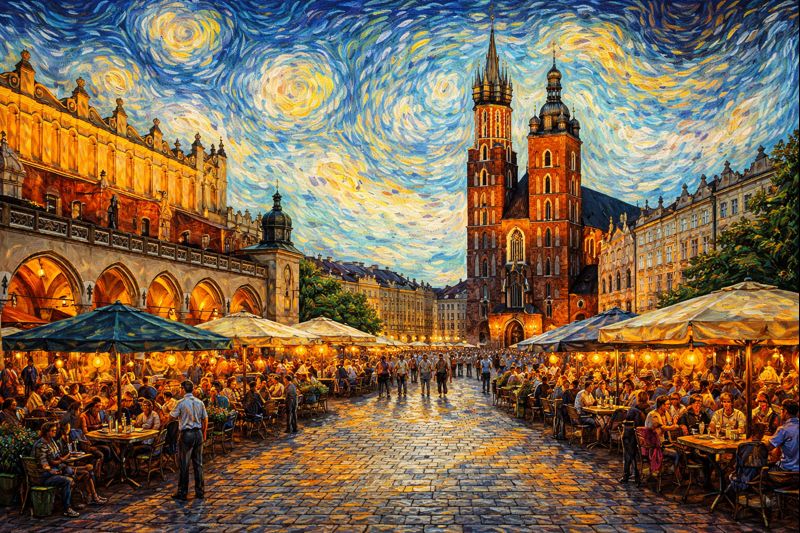
🍽️ Eating Outdoors: Cheap vs “Did I Just Pay WHAT?”

🥟 Budget Option (Milk Bars / Simple Restaurants)

  • Main dish: 20–35 PLN (€5–€8)
  • Full meal: 30–50 PLN (€7–€12)

💡 Expect pierogi, soups, and comfort food that tastes like someone’s grandmother made it (because she probably did).


🍕 Mid-Range Restaurant (Outdoor Seating in Old Town)

  • Main dish: 40–80 PLN (€10–€18)
  • Dinner with drink: 60–120 PLN (€14–€28)

💡 This is where most tourists land. Solid food, nice vibe, slightly inflated prices.


🍷 Luxury Dining (Yes, Kraków Has This Too)

  • Main dish: 90–180 PLN (€20–€40)
  • Dinner with wine: 150–300+ PLN (€35–€70)

💡 White tablecloths, artistic food, and portions that may or may not emotionally satisfy you.


💡 Want to Spend as Little as Humanly Possible?

Then you’ll want to read this survival guide:
👉 How to survive Kraków on a budget (museum traps, free days, and the great water debate)

Because yes… paying for bottled water in Kraków can feel like a personal betrayal.


🧠 Final Thoughts: Cheap or Expensive?

👉 Compared to Budapest: very similar (sometimes slightly more expensive in tourist areas)
👉 Compared to Berlin: cheaper
👉 Compared to London: laughably cheap

But here’s the truth:

  • Kraków can be cheap
  • Kraków can be expensive
  • And you decide which one you experience

😄 The Golden Rule

If you sit on the Main Square, order cocktails, and take taxis everywhere…
💸 you’ll spend like you’re in Paris.

If you walk, eat local, and avoid tourist traps…
🍻 you’ll feel like you’ve hacked the system.

And honestly? That’s half the fun.

How to Survive Kraków on a Budget: Museum Traps, Free Days, and the Great “Water Debate”

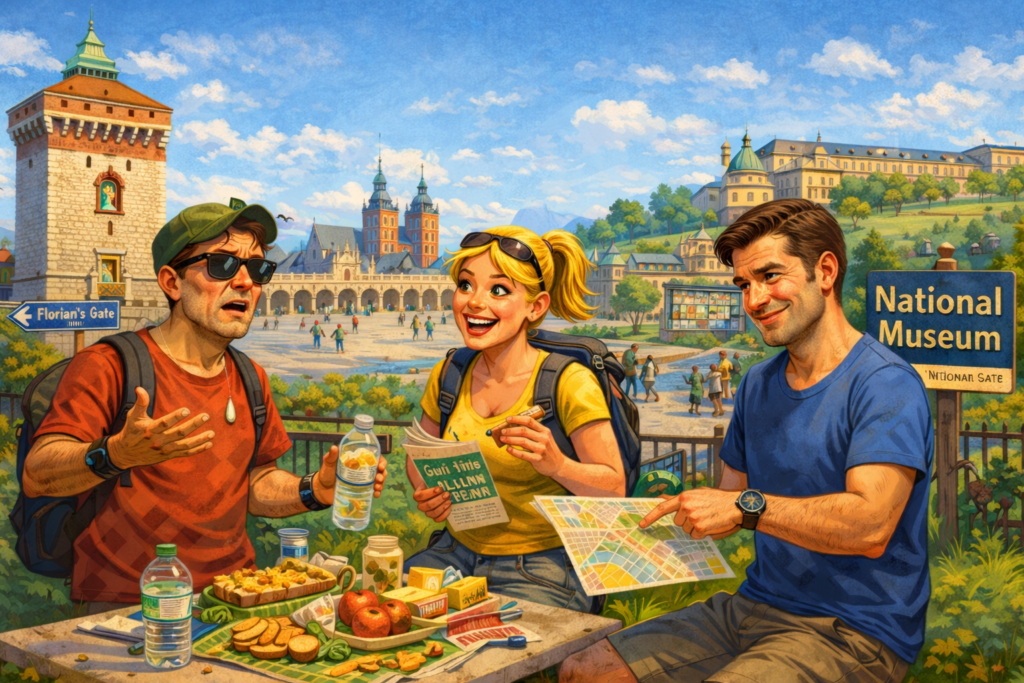
Anita: Everyone, put down your coffees (which, by the way, were way too expensive) and focus! I’ve made a decision: this Kraków trip is not going to ruin our bank accounts. Free museums, picnics by the Vistula River, and zero unnecessary spending. Kraków is a budget traveler’s paradise!

George: Oh, here we go. I know this “free” talk. “Free” usually means standing in line for three hours in the blistering sun only to find out you can only look at the museum’s left cloakroom for free, while they want your kidney for the rest of the exhibit. Remember when we tried to be clever in Spain? Madrid’s free museum slots were more chaotic than a stock market crash. If you didn’t enter at exactly 6:01 PM, you were paying full price.

William: George, don’t be so cynical. Though after our last debate about whether Kraków is actually walkable or just a trap, I understand your skepticism. But I’ve done the research: Kraków is actually much more predictable than Madrid, and more generous than you’d think.

Anita: Exactly! In Lisbon, I nailed the city on a tiny budget because I knew which Sundays the museums opened their doors. Kraków is the same; you just need a solid schedule.


The Great Museum Schedule: William’s Fact-Check

George: Fine, William, you genius, show me the list. Which “trap” can we walk into for free that will likely take up our entire day?

William: Listen up, because this is actually useful. In Kraków, most state-run museums have one dedicated free admission day per week. Here is the reality:

  • Monday: This is the day for wartime history. The permanent exhibition at Schindler’s Factory (Fabryka Emalia Oskara Schindlera) is free. But beware, George: ticket numbers are limited, so you have to book online in advance, or you’ll just be staring at the fence.
  • Tuesday: This is the heavy hitter day. The Rynek Underground Museum (located right beneath the Main Square) and the Cloth Hall (Sukiennice) gallery on the upper floor are both free.
  • Wednesday: If you’re into contemporary art, MOCAK offers free entry today.
  • Sunday: The National Museum (Muzeum Narodowe) main building and several branches (like the permanent sections of the Czartoryski Museum) offer free entry.

George: Monday is Schindler, Tuesday is underground… William, this isn’t a vacation, it’s a logistics nightmare! If we miss a turn, there goes 40 PLN. And what’s the catch with the “permanent exhibition only” fine print?

William: Good question. The free entry almost always applies only to permanent exhibitions. Temporary, “extra” shows usually still require a ticket. But George, the permanent collections here are so massive that by the time you reach the end, you’ll be in a museum coma anyway.


Strolling the Cloth Hall and Wawel Courtyards—For $0

Anita: See, George? William told you. But if you don’t want to be trapped inside buildings, the city itself is a free museum! Take the Cloth Hall (Sukiennice). We can walk right through the center, look at the handicraft stalls, smell the leather goods… and it costs absolutely nothing as long as we don’t buy every second amber necklace.

George: So your suggestion is to walk into a market and not buy anything? That’s like sitting in a restaurant just to smell the food. It’s torture, Anita! Pure torture!

William: George, stop the drama. The same applies to Wawel Castle. You can walk into the main courtyards, around the Cathedral area, and along the castle walls for free. You only pay if you want to see the Royal Private Apartments or the Treasury. The panoramic view of the Vistula and the Renaissance architecture cost exactly 0 PLN.

Anita: And Kazimierz! The Jewish Quarter’s streets, the street art, the atmosphere… just wandering there is an experience. You don’t have to enter every single synagogue to feel the history. This is “slow travel,” guys!

George: I’d call it “no money travel.” But at least my legs are used to the punishment since our last walking spree.


Pro-Saving Hacks: Vodka is Optional, Water is Heroic

Anita: Let’s talk food. George, I know you want to sit down for a three-course meal on every corner, but if we’re saving, we’re heading to the grocery store. We’ll get fresh bread, Polish ham, cheese, and have a picnic by the Vistula. It’s cheaper than any restaurant, and the view is better!

George: A picnic? You mean sitting on the ground with ants crawling up my trousers while the wind steals my napkin? And what are we drinking? Beer is cheap here, but it still adds up.

Anita: Water! We already discussed this: Kraków tap water is safe, refreshing, and—drumroll please—completely free! Just refill your bottle. Water is cheaper than regret, George.

George: What about the vodka? I thought vodka was a food group in Poland.

William: Vodka is optional, George. While it sometimes seems cheaper than a soda, if the budget is the goal, tap water is the winner. Also, if you want a hot meal without the price tag, look for a Milk Bar (Bar Mleczny). These are a legacy of the socialist era—simple, filling food like pierogi or zurek for a fraction of the cost of a trendy restaurant.

George: A Milk Bar? That sounds like a place that only serves milk and cereal.

William: No, it’s a cafeteria. No waiters, no frills, but you get a steaming plate of food for 15-20 PLN. It’s the secret to budget survival.


The Verdict: Can You Explore Kraków Without Going Broke?

Anita: See? If we pick the right days, use William’s museum list, refill our water bottles, and eat at Milk Bars, Kraków is practically a steal! More money left for… well, the next trip!

George: So the plan is to walk a lot (again), drink water (like heroes), and huddle in Schindler’s Factory on Mondays with every other budget-hunter. I’m not saying it doesn’t sound exhausting, but I have to admit: Kraków doesn’t seem desperate to suck every zloty out of my pocket if we plan a little bit.

William: Exactly. Kraków rewards people who do a tiny bit of homework. You don’t have to starve or suffer; you just need to know when the free gates open.

Anita: Then let’s go! George, put away your credit card—today all we need are your feet and your water bottle!

George: Lord help me… but at least the water is actually drinkable. That’s my only silver lining.


The Takeaway

Exploring Kraków doesn’t have to be expensive. Here is the quick summary for the budget-conscious hero:

  1. Museum Free Days: Monday (Schindler’s), Tuesday (Rynek Underground, Cloth Hall), Sunday (National Museum).
  2. Walk Everywhere: The Old Town, Wawel Courtyards, and Kazimierz are free attractions.
  3. Hydrate for Free: Tap water is safe and free.
  4. Eat Smart: Milk Bars (Bar Mleczny) are your best friend for cheap, hot Polish food.

Is Kraków Actually Walkable, or Are We Walking Into a Trap?

Anita: Look at this sunshine! Look at these cobblestones! Guys, I’ve decided. We are officially a “walking-only” group for this Kraków trip. No trams, no taxis, just us, our sneakers, and the glorious Polish air.

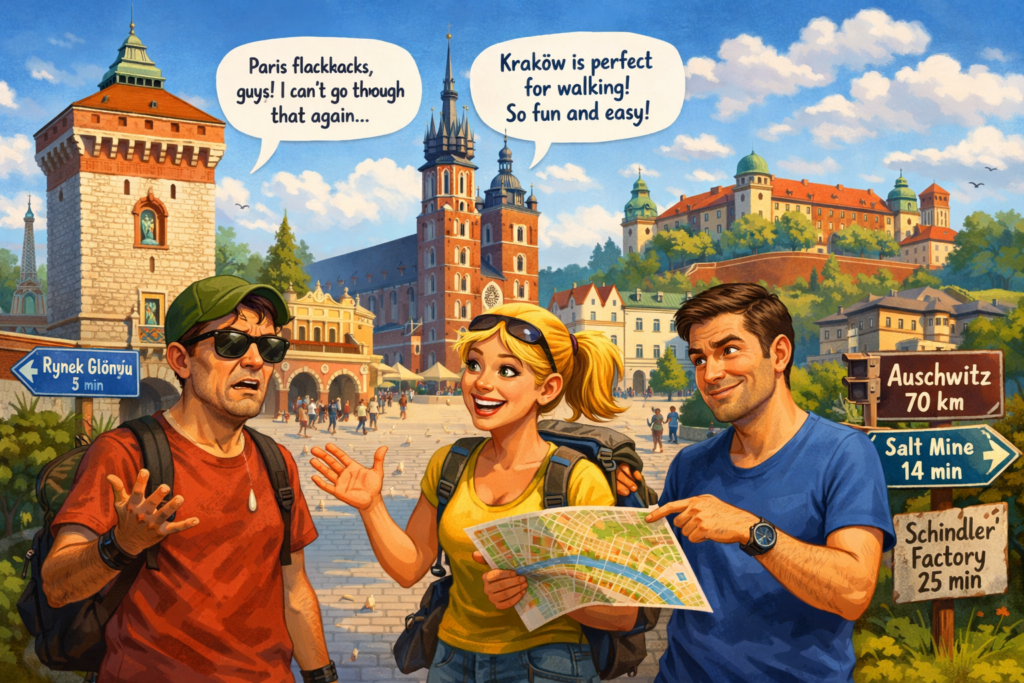
George: Oh, absolutely not. I’ve heard this siren song before, Anita. “It’s just a stroll,” you said in France. My feet still have post-traumatic stress disorder from trying to walk across Paris. I saw the Eiffel Tower from a distance and three hours later, it was somehow further away. I’m not doing it. I’m staying in the hotel lobby until the Uber arrives.

William: George, breathe. I’ve got the map out. Kraków isn’t Paris. Paris is a sprawling metropolis designed to break your spirit; Kraków’s historic center was basically designed for people who didn’t own horses.

Anita: See! William gets it. It’s compact, it’s charming, and think of the calories we’ll burn for pierogi!


Round 1: Florian’s Gate to the Main Market Square

George: “Compact” is a relative term. To a marathon runner, Poland is compact. To me, moving from the bed to the bathroom is a journey. How far is the “Royal Route” really, William? Give me the cold, hard, painful truth.

William: From Florian’s Gate—the big stone gateway at the top of the Old Town—to the Main Market Square (Rynek Główny), it is exactly 450 meters. That’s about a five-minute walk, George. Even you can’t complain about 500 steps.

Anita: Five minutes! We’ll be there before George even finishes his first sigh of the day. And think of what we’ll see! The street performers, the window displays of amber jewelry, the smell of fresh obwarzanki (those bagel things)!

George: Five minutes in “William-time” is usually twenty minutes in “George-with-blisters-time.” And what about hydration? If I’m trekking across a city, I need supplies. I bet the bottled water here costs a fortune.

George: Actually, I did some digging because I don’t trust anything, and apparently, Kraków tap water is perfectly drinkable. They even have these “Woda Krakowian” fountains. So, I suppose I won’t die of dehydration, but my knees are still on high alert.

William: It’s true. The water is fine, the path is flat, and honestly, if you take a taxi for 450 meters, the driver will probably laugh you out of the car.


Round 2: The Trek to Wawel Castle

Anita: Okay, so we’ve conquered the Square. Now, we head south to Wawel Castle! It’s a straight shot down Grodzka Street. It’s basically like walking through a fairytale.

George: I know this trick. The “straight shot” that turns into a three-mile odyssey. In Paris, I thought I could walk from the Louvre to the Arc de Triomphe. I ended up in a different time zone with a limp. How many miles is this “fairytale,” William?

William: From the Main Market Square to the foot of Wawel Hill, it’s roughly 800 to 900 meters. Let’s call it a 10-to-12-minute walk.

Anita: Twelve minutes! That’s nothing! You spend more time than that picking out a pair of socks, George. We’ll be walking past gorgeous churches and historic townhouses. You won’t even notice your feet moving.

George: I will notice. My feet have a very loud internal monologue, and right now, it’s screaming, “Get a tram!” Why are we walking when there are perfectly good trams everywhere? They’re blue! They’re pretty!

William: Because the Old Town is mostly pedestrianized, George. A taxi would have to take a massive detour around the Planty Park. Walking is literally the fastest way. Plus, the Planty is a circular park that rings the whole Old Town. If you get lost, you just keep walking in a circle until you hit something you recognize.

George: So, it’s a treadmill. You’ve trapped me on a medieval Polish treadmill.


Round 3: The Schindler’s Factory Challenge

Anita: Now, for the afternoon, we head to Kazimierz (the Jewish Quarter) and then over the bridge to Schindler’s Factory in Podgórze. It’s a bit further, but the bridge has these amazing floating sculptures!

George: “A bit further.” There it is. The phrase that preceded my 2018 breakdown in the Tuileries Garden. William, check the satellites. How far is the Square to Schindler’s Factory?

William: This is where George actually has a point. From the Main Market Square to Schindler’s Factory, you’re looking at about 2.5 to 3 kilometers (roughly 1.8 miles).

Anita: That’s just a brisk 35-minute walk! Think of the fresh air! The views of the Vistula River!

George: Thirty-five minutes? One way? That’s over an hour of movement, Anita! My body isn’t built for “brisk.” It’s built for “sedentary with occasional bursts of reaching for the remote.”

William: To be fair, 3 kilometers on cobblestones can feel like 5. If we walk from the Old Town, through Kazimierz, and then all the way to Podgórze, we’re going to be clocking in some serious steps.

Anita: But we can stop for coffee! And craft beer! And more tap water since George is obsessed with the safety of the local pipes.

George: I’m not obsessed; I’m prepared. Unlike you, who thinks we can walk to the moon if there’s a nice view. Let’s be real—is this walk actually doable for a man who considers a flight of stairs an “expedition”?

William: It’s doable, but I’d suggest a compromise. We walk to Kazimierz, have lunch, and if George’s legs haven’t fallen off, we continue to the factory. If they have, we hop on a tram for the last three stops.


The “Are You Insane?” Section: Auschwitz & The Salt Mine

Anita: While we’re on the topic of walking… I saw a sign for the Wieliczka Salt Mine and Auschwitz-Birkenau. Since we’re such an active group now…

William: Stop. Right there. Absolutely not.

George: Oh, please tell me you’re joking. You want to walk to the Salt Mine?

Anita: I mean, it’s just outside the city, right? How bad could it be?

William: Anita, the Wieliczka Salt Mine is about 15 kilometers from the city center. That’s a three-hour walk along busy roads. And Auschwitz? That’s almost 70 kilometers away. Even the most hardcore hiker would take two days to get there.

George: Finally! Validation! See? This is how it starts. “Let’s walk to the square,” then “Let’s walk to the factory,” and before you know it, we’re trekking across the Polish countryside like a band of medieval peasants.

William: For the record: Nobody walks to Auschwitz or the Salt Mine. You take a train, a bus, or an organized tour. If I see anyone attempting that walk, I’m calling a medical professional.

Anita: Okay, okay! I overshot. But you have to admit, the Old Town part sounds lovely.


The Verdict: To Walk or Not to Walk?

George: I’ll admit, the distances in Paris were objectively insane compared to this. If William is right and the Royal Route is under a kilometer, I might survive. But I’m wearing my thickest socks.

William: Here’s the reality: Kraków is one of the most walkable cities in Europe, provided you stay within the city limits.

The Realist’s Summary:

  • Old Town & Wawel: 100% walkable. Don’t even bother with a car.
  • Kazimierz: Very walkable and best explored by getting lost in the side streets.
  • Schindler’s Factory: Walkable if you’re fit and the weather is nice, but the tram is a valid backup.
  • Auschwitz/Salt Mines: Take the bus. Don’t be a hero.

Anita: So we’re agreed! We walk the history, we drink the free tap water, and we only use the tram when George starts making that “I’m dying” face.

George: That face starts at kilometer two, Anita. Just so we’re clear.

William: I’ll download the “Jakdojade” app for the tram schedules just in case. Now, let’s go. Florian’s Gate is only 450 meters away—I think George can make it at least that far before his first breakdown.

George: I make no promises.