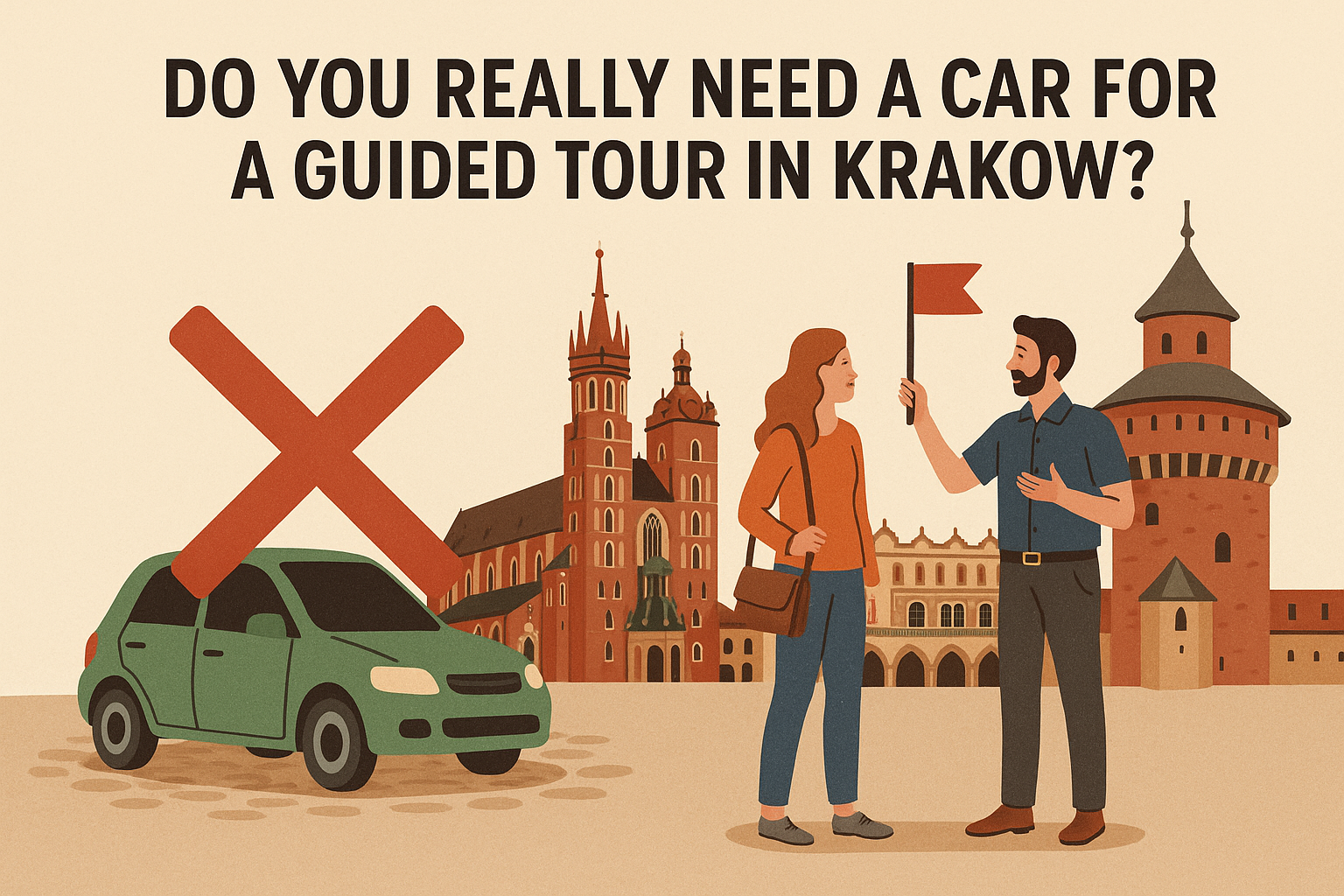
When visiting a new city, it’s natural to wonder how best to explore it. Some cities are vast and require transport to truly appreciate their sights, while others are compact and best experienced on foot. So, what’s the case for Krakow? Do you really need a car for a guided tour? Let’s compare Krakow to a few other popular European cities to help answer that question.
Budapest – A City Where a Car Makes Sense (Sometimes)
In Budapest, guided tours often include a vehicle—and with good reason. The Hungarian capital is large and spread across two sides of the Danube. A walking tour is certainly possible and recommended for some areas, but if you want to visit Gellért Hill for a panoramic view, stroll along the Parliament, and explore the expansive City Park in the same tour, then a car makes the logistics much easier. Many guided tours in Budapest are built around this reality.
Prague – Perfectly Walkable
In contrast, Prague is a dream for walking tours. The most important areas of the city—such as the Old Town, Jewish Quarter, Charles Bridge, and Castle District—are all within a comfortable walking distance. A guided tour in Prague allows you to explore all of these key locations on foot, offering an immersive experience without ever needing a car.
Amsterdam – More Problems Than Joy in a Car
Amsterdam presents another unique case. The city is larger than Prague but has a layout that makes driving difficult and slow due to canals, narrow streets, and limited parking. Here, private tours in Amsterdam are often conducted on foot or by bicycle. While it’s possible to explore areas like the Museumplein, Anne Frank House, and Central Station by car, you’ll likely spend more time in traffic than enjoying the city.
Krakow – Made for Walking
Now, back to Krakow.
Krakow’s Old Town is compact, charming, and incredibly well-preserved—perfect for a walking tour. Most guided tours start from the Main Market Square, which is not only the heart of the city but also the largest medieval town square in Europe. From here, you can visit landmarks such as:
- St. Mary’s Basilica
- The Cloth Hall (Sukiennice)
- The Barbican and Florian Gate
- Wawel Castle and Cathedral
These sights are all located within easy walking distance of each other. In fact, the historic center is largely pedestrianized, making cars more of a hindrance than a help.
A typical walking tour lasts 2–3 hours and covers the highlights of the city without ever needing a vehicle. It’s a relaxed, informative, and enjoyable way to experience Krakow.
When a Car Becomes Useful
That said, there are moments when transportation is essential:
- Schindler’s Factory Museum – Located in the Podgórze district, it’s a longer walk from the center, so a tram, taxi, or tour van is practical.
- Auschwitz-Birkenau – Situated about 70 km from Krakow, a car or guided tour with transportation is necessary.
- Wieliczka Salt Mine – Also outside the city, this popular destination requires transport. Booking a guided tour to the Salt Mine often includes hotel pickup and drop-off.
Final Thoughts
If your plan is to explore the Old Town and Wawel Hill, there is absolutely no need for a car. Walking not only gives you the best access to Krakow’s narrow streets and hidden gems, but it also offers a deeper connection to the city’s atmosphere and history.
Cars are useful when you plan to go beyond the city limits—but within Krakow itself, the best tours happen on foot.
For more inspiration, visit:


